What Are Controlled Atmosphere Furnaces?
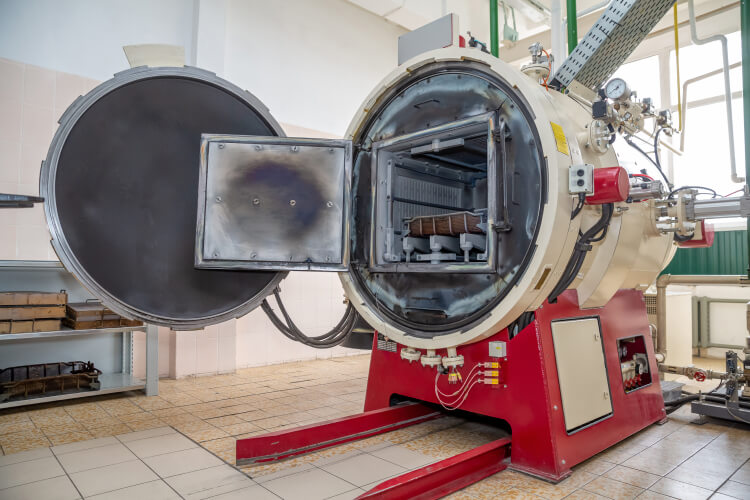
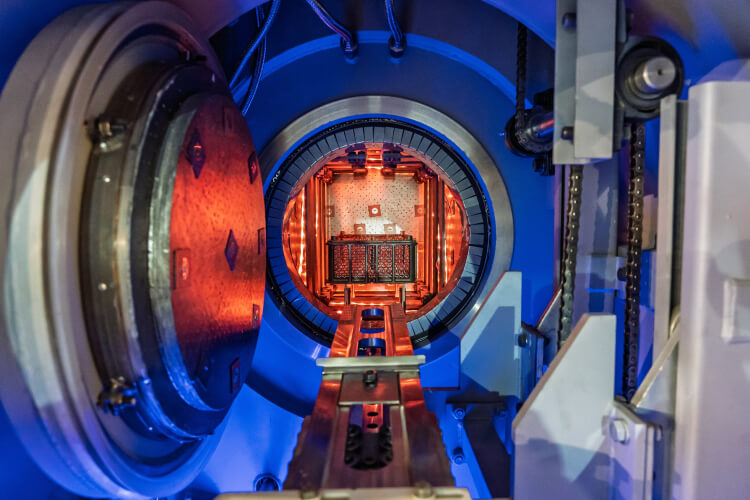
Controlled atmosphere furnaces are industrial heating systems designed to regulate the internal environment during thermal processing. Instead of exposing materials to ambient air, these furnaces use carefully managed gases to create specific atmospheric conditions that protect the material throughout the heating cycle.
Depending on the application, manufacturers may use inert gases like nitrogen or argon to minimize oxidation or reduce gases such as hydrogen to remove surface oxides to improve cleanliness. In some applications, vacuum environments may also be used to eliminate contamination.
The primary goal of atmosphere control is to maintain material purity and consistency while preventing unwanted chemical reactions at elevated temperatures. This is especially important in industries where product quality depends on precise metallurgical or structural properties.
Because many advanced materials are highly sensitive to oxygen and moisture exposure during heating, atmosphere control has become essential for achieving reliable results in modern manufacturing.
Why Atmosphere Control Matters in Advanced Materials Processing
During high-temperature processing, materials can react quickly with oxygen, carbon, moisture, or airborne contaminants. These reactions may alter surface chemistry, weaken structural integrity, or negatively impact conductivity, hardness, corrosion resistance, and appearance.
Key Advantages of Atmosphere-Controlled Furnaces
For manufacturers involved in advanced materials processing, maintaining a controlled environment ensures product performance and repeatability. The most important benefits of controlled atmosphere furnaces include:
- Reduced oxidation and scaling
- Improved surface quality
- Better temperature and process consistency
- Enhanced material purity
- Greater repeatability between production cycles
- Lower contamination risk
- Improved mechanical and chemical properties

Controlled atmosphere systems also help manufacturers reduce waste and improve efficiency by minimizing defects caused by inconsistent processing conditions. As industries continue to demand tighter tolerances and higher-performing materials, atmosphere-controlled processing has become a competitive necessity.
Common Applications of Controlled Atmosphere Furnaces
The growing demand for high-performance materials has expanded the applications of controlled atmosphere furnaces across numerous industries. These systems are commonly used whenever materials require protection from oxidation or contamination during thermal processing. Applications can include:
- Powder metallurgy
- Battery material processing
- Aerospace component manufacturing
- Research and laboratory testing
- Additive manufacturing post-processing
- Specialty alloy production
Comparing Controlled Atmosphere Furnaces to Other Furnace Types
Selecting the right furnace depends on the materials being processed, temperature requirements, and production goals. While several furnace types are used throughout manufacturing, not all provide the environmental precision needed for sensitive applications. Other common industrial furnace types include:
- Basic oxygen furnaces: Commonly used for basic heat treatment and general-purpose heating applications. However, because materials are exposed directly to oxygen during processing, oxidation and scaling can occur at high temperatures.
- Vacuum furnaces: These offer excellent contamination control by removing air entirely from the chamber. These systems are highly effective for processing reactive metals and high-purity materials, though they are often more expensive and may not be necessary for every application.
- Tube furnaces: Frequently used in laboratories and research settings because they provide precise temperature control and localized atmosphere regulation for smaller samples.
- Continuous belt furnaces: Designed for high-volume production and can also incorporate atmosphere control for processes such as sintering and controlled atmosphere brazing.
Trust Sentro Tech for Advanced Materials Processing Equipment
With advanced temperature control and reliable performance, Sentro Tech provides controlled-atmosphere furnaces to manufacturers looking to improve efficiency and maintain a consistent product quality.
Request a QuoteFrequently Asked Questions
Can existing furnaces be upgraded to include atmosphere control?
In some cases, existing furnaces can be retrofitted with atmosphere control components such as gas delivery systems, oxygen sensors, and chamber sealing upgrades. However, it depends on the furnace design, operating temperature, and overall condition of the equipment.
For manufacturers handling sensitive materials, replacing outdated systems with purpose-built controlled-atmosphere furnaces may provide better long-term reliability and performance.
How do I monitor and maintain the atmosphere inside a furnace during operation?
Modern atmosphere-controlled systems use sensors and automated controls to continuously monitor oxygen levels, gas composition, pressure, and moisture content during operation.
Routine maintenance typically includes inspecting seals, calibrating sensors, checking gas flow systems, and verifying overall chamber integrity. Proper monitoring helps maintain consistent processing conditions and reduces the risk of contamination or process instability.
How does Sentro Tech ensure precise atmosphere control and uniformity in their furnaces?
Sentro Tech designs high-performance furnace systems engineered specifically for demanding thermal processing applications. Their furnace solutions incorporate advanced insulation materials, precision temperature controls, and customizable atmosphere management systems to support highly controlled processing environments.
By combining accurate gas flow regulation with excellent temperature uniformity, Sentro Tech helps manufacturers achieve reliable results in industries such as metallurgy, ceramics, electronics, and other advanced materials processing applications.
Rely on SentroTech for Molybdenum Disilicide Heating Elements and Much More
As industries increasingly seek more efficient and reliable heating solutions, the advantages of molybdenum disilicide heating elements become ever more evident. Make sure you're equipped with the ideal solution for your unique needs. Whether for laboratory research, ceramics manufacturing, or metal heat treating, Sentro Tech has the MoSi2 heating element to boost operational performance in your corner of the world.
Request a quote today and let's discuss how we can provide you with the vacuum heating treatment that best suits your manufacturing process.
Request a Quote