Ceramic Fiber Board
The case for high-temperature ceramic insulation comes down to three things engineers care about: cost, efficiency, and how hard you can push it before it gives up.
Cost
Ceramic fiber’s low thermal mass means your furnace heats up faster and cools down faster, so you’re spending less energy holding temperature and less time waiting between runs. That shows up directly on your utility bill and indirectly in throughput. A well-insulated chamber can cut energy consumption compared to dense refractory linings, and the fiber’s light weight reduces structural load on the furnace shell.
Efficiency
Ceramic fiber has very low thermal conductivity, which means more of your input energy goes into the work and less escapes through the walls. Combined with excellent thermal shock resistance, the material handles rapid cycling without spalling or cracking, which is important if you’re running varied schedules rather than steady-state.
Temperature Ceiling
Our ceramic products are rated well into the range where most other insulation materials simply fail. Fiberglass and mineral wool both tap out long before ceramic fiber even reaches its working range. If you’re running anything above 1000°F, ceramic fiber is effectively the entry point rather than a premium upgrade.
Where Ceramic Insulation Fits
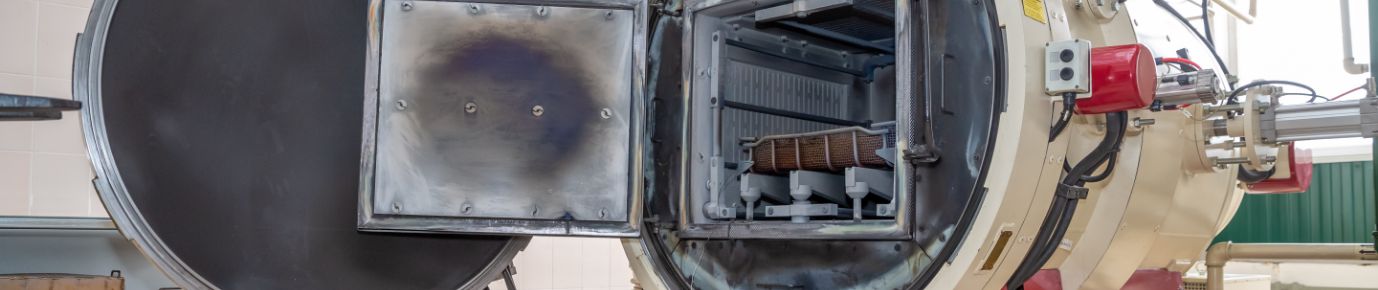
Typical high-temperature insulation applications include lab and production furnaces, kilns, boilers, piping, and chemical and nuclear protection systems. Anywhere you’ve got a hot face that needs to stay contained, ceramic fiber is usually in the running. It’s also a common choice for back-up insulation behind firebrick or castable refractory, where its low heat storage helps the whole system respond more predictably.
Boards or Blankets?
We offer two product families, and the one you need depends on how the insulation must behave in service.
- Ceramic fiber boards are rigid, dimensionally stable, and a good fit for furnace walls, hot-face linings, and anywhere you need the material to hold its shape under load. They machine cleanly, resist corrosion, and handle thermal shock without complaint.
- Ceramic fiber blankets are the flexible counterpart: spun fiber wraps around piping, fills irregular cavities, and works well as expansion joints or back-up insulation. Lightweight, easy to cut, and quick to install.
Pro tip: Our team has spent nearly 30 years matching ceramic insulation to specific furnace builds. If you’re not sure which grade or thickness fits your application, send us the details and we’ll work it out with you.
Get the Best Ceramic Fiber Insulation for Your Furnace
Temperature range, chamber dimensions, cycle profile: tell us what you’re running, and we’ll spec the ceramic fiber board or blanket that fits. SentroTech has been engineering high-temperature solutions out of Strongsville, Ohio, since 1998, and we’re perfectly positioned to meet your commercial or high-temperature application needs.
Frequently Asked Questions: High-Temperature Ceramic Fiber Insulation
What temperature is ceramic insulation rated for?
Ceramic fiber insulation typically performs continuously from around 2000°F to 2600°F (roughly 1100°C to 1430°C), depending on the grade and chemistry. Higher-purity formulations push the ceiling further. For most lab and industrial furnace work, that range covers the field comfortably.
What are the advantages of ceramic insulators?
Advantages include low thermal conductivity, low heat storage, excellent thermal shock resistance, light weight, and chemical stability across a wide range of environments. Ceramic insulators heat and cool
What is the best ceramic thermal insulator?
“Best” depends on the job. For rigid hot-face linings under mechanical load, ceramic fiber board wins. For wrapping irregular shapes, expansion joints, or back-up insulation, blanket is the right call. For the highest service temperatures, look at higher-alumina or zirconia-grade fiber.
Is ceramic fiber insulation fireproof?
Ceramic fiber is non-combustible and won’t burn or support combustion. It’s not the same as “indestructible at any temperature,” though. Every grade has a service limit, and exceeding it causes shrinkage and devitrification rather than fire.